


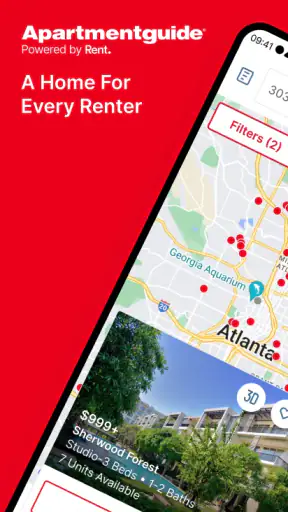

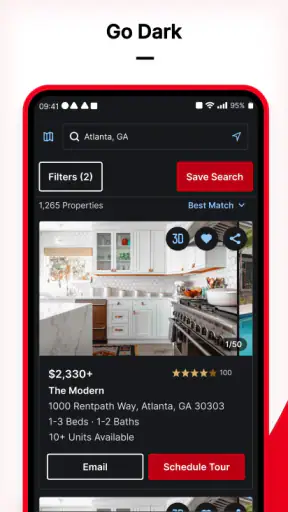
Apartment hunting usually starts with an awkward mix of urgency and uncertainty: a lease is ending, a new job is in another part of town, or a growing household needs more room. I found Apartments by Apartment Guide most useful in that early stage, when I needed to turn a vague idea such as “somewhere affordable near work” into a manageable set of rental possibilities. It is a free House & Home app from Rent Group, Inc, designed around apartments and rental homes rather than home buying.
My first impression was that the app works best as a practical search companion, not as a complete replacement for every part of renting. It can help narrow the field, compare locations, and keep a search moving when browsing on a phone is more convenient than sitting at a computer. The experience is aimed at everyday renters, and its Everyone content rating makes it suitable for a broad audience. Still, finding a listing is only the beginning; contacting a property, checking the details, and arranging a viewing remain important steps outside the app.
From a vague housing need to a workable shortlist
The starting condition matters more than many people expect. If I open the app without knowing anything about my preferred area, budget, household size, or move-in timing, the number of possibilities can become distracting. I get better results when I decide which requirements are firm and which are negotiable before searching. For example, I might treat access to public transportation as essential, while allowing some flexibility around floor level or decorative style.
That preparation turns Apartments by Apartment Guide into a decision tool instead of a stream of attractive photos. I can begin with a broad area, then reduce the list using the details that affect daily life. A rental that looks inexpensive may become less appealing if it creates a difficult commute, while a slightly less obvious neighborhood may offer a better balance of space and convenience.
I also recommend separating “must have” from “would like.” A second bathroom, a balcony, parking, laundry access, or a pet-friendly policy can all influence the final choice, but treating every preference as equally important makes the search unnecessarily narrow. The app is more useful when I use it to explore trade-offs rather than expecting one result to satisfy every wish.
Because the service covers both apartments and rental homes, it can support different stages of life. Someone moving into a first apartment may want a compact place close to work. A family may need more bedrooms and storage. A renter who has previously searched only apartment communities may find it worthwhile to compare those options with individual rental homes, where the responsibilities and viewing process can feel different.
How I work through a search
I start by choosing the location that actually matches my routine, not merely the name of a desirable neighborhood. If I am searching for a home after changing jobs, I think about the route I will take several times a week. If I am moving for school or family reasons, I consider the places I will visit regularly. This prevents the common mistake of selecting a home based on a map view that looks convenient but does not reflect real travel.
Next, I use the available search controls to establish a realistic range. I avoid setting the budget at the absolute maximum I could technically pay, because rent is only one part of the monthly cost. Utilities, transportation, deposits, insurance, and move-in expenses can change the calculation. The app helps me collect candidates, but I still make the affordability decision with a separate household budget.
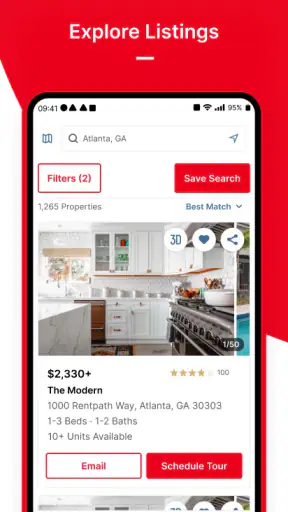
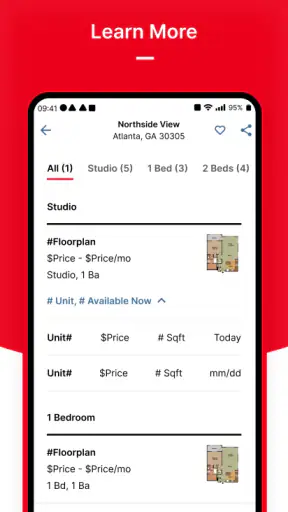
When a listing catches my attention, I read beyond the first appealing details. I look for the number of bedrooms, the general location, the type of property, and any information connected to availability. I also compare several listings instead of assuming the first suitable result is the best one. This is one of the app’s strongest everyday uses: it makes side-by-side thinking easier than relying on memory after visiting many separate property pages.
A useful tactic is to create a small shortlist with different purposes. I might keep one option that is strongest for location, another that offers more space, and a third that appears to fit the budget most comfortably. This gives me a reference point when I contact properties. It also exposes unrealistic expectations early: if every acceptable location exceeds my budget, I know I need to adjust the area, size, or timing.
I would not treat a listing’s presence in the app as proof that the home is still available. Rental markets change quickly, and a property can receive interest before I have time to respond. I use the listing as a starting point for verification, then confirm the current situation directly with the relevant property contact.
The handoff from browsing to contacting a property
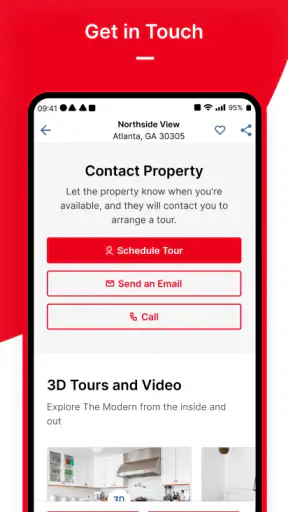
This is where the workflow changes. Browsing is private and low-pressure; contacting a landlord or property manager creates a real-world conversation. Before reaching out, I prepare a short set of questions so I do not waste the opportunity. I want to know whether the advertised home is currently available, what the total monthly cost involves, which utilities are separate, and what the next step would be.
I also ask about details that can be easy to overlook in a quick search: parking arrangements, pet rules, laundry access, accessibility, lease length, and the expected move-in timing. The exact questions depend on my situation, but the principle is consistent. A listing can help me decide whether to inquire; it cannot replace the conversation that confirms whether the home fits my circumstances.
For a shared household, this handoff is especially important. I might use the app to gather options, then send the shortlist to a partner, roommate, or family member for review. Instead of forwarding every possibility, I share only the few that meet the main requirements and explain the compromise behind each one. That keeps the discussion focused and makes it easier to agree on which property deserves a call or visit.
For a renter relocating from another city, the app can be useful before traveling. I can build a preliminary list and organize a day around a few promising places. However, I would still confirm each appointment independently and leave room for changes. Travel plans based entirely on unconfirmed listings are risky, especially when the search is time-sensitive.
The developer behind the app is Rent Group, Inc, and the product has been available since September 2, 2010. That long presence helps explain why it feels like an established rental-search service rather than a newly launched experiment. Its current version is 12.5.0, and it supports devices running Android 8.0 or later. For someone using an older phone, the operating-system requirement is worth checking before planning a search around the app.
What the result looks like in everyday use
Imagine I receive confirmation that my current lease will end in a few months. I begin with a target area close enough to my workplace, then compare apartments with rental homes instead of limiting myself to one property type. After reviewing the results, I keep three candidates: one with the best commute, one with more room, and one that seems to leave the most breathing space in my budget.
I then contact the properties with specific questions and record the answers somewhere separate from the app. One may no longer be available. Another may have a more complicated cost structure than the initial listing suggested. The third may turn out to be a strong match after I confirm the viewing process. In this scenario, the app has done its job even though it has not completed the rental: it has helped me move from uncertainty to a focused set of next actions.
That distinction is important. Apartments by Apartment Guide is valuable for discovery and comparison. The final outcome depends on conversations, documents, inspections, timing, and the terms offered by the property. I would be cautious about anyone who treats a polished listing as a guarantee of condition, availability, or approval.
The app’s reach is reflected in its audience: it has more than a million installs, an average rating of 4.6 from roughly fifty-two thousand ratings, and about six thousand reviews. Those figures suggest that many renters find the basic search experience useful, but they should not be interpreted as a promise that every person will find the same inventory or have the same contact experience. Rental availability is highly dependent on location and timing.
Where the workflow becomes less comfortable
The main friction is the gap between a clean search result and the messy reality of renting. Information can change, listings may require additional confirmation, and the details that matter most to a particular renter may not be equally prominent in every result. I have to stay alert and avoid making assumptions based on a headline, a photograph, or a single appealing feature.
Another limitation is that a broad rental marketplace cannot fully understand my personal priorities. I may care about noise, natural light, building maintenance, or the feel of a street at night. Those judgments require research and, ideally, an in-person visit. The app can help me decide where to look, but it cannot tell me how a building feels during my actual commute or whether the surrounding area suits my habits.
Searchers who need a very specialized home may also need other resources. Someone looking for a highly specific accessibility setup, a short-term arrangement, a particular student housing system, or a tightly defined local market should compare Apartments by Apartment Guide with services focused on that niche. The app is a sensible general starting point, but a specialist source may provide more relevant context for an unusual requirement.
I would also skip relying on it alone if I am already working with a trusted local agent, housing organization, or property contact who has direct knowledge of the exact area. In that situation, the app can still provide comparison points, but the human source may be more efficient for interpreting local conditions and matching a narrow brief.
Small habits that make the app more useful
My first practical tip is to search in layers. Begin with a wider area and a few essential requirements, then narrow only after seeing what the market offers. Starting too narrowly can hide reasonable alternatives, while starting too broadly can create noise. The right balance depends on how flexible I am and how quickly I need to move.
Second, I keep a written comparison outside the app. I note the property name, location, estimated monthly commitment, contact status, questions still unanswered, and the reason it made my shortlist. This prevents two common problems: contacting the same place repeatedly and forgetting why an apparently attractive listing was rejected.
Third, I use the app to prepare better conversations rather than simply to collect listings. Before contacting a property, I identify the one or two details that would immediately rule it out. Asking those first saves time for both sides. If parking is essential or the move-in date is fixed, there is little value in arranging a viewing before confirming those points.
Fourth, I compare property types deliberately. An apartment community may offer a different living arrangement from a rental home, even when both meet the same bedroom requirement. The practical trade-off can involve space, shared facilities, location, and the style of communication with the property contact. The app is most helpful when I use its range to examine that choice rather than assuming the categories are interchangeable.
Finally, I treat speed and caution as partners. Responding promptly can matter in a competitive rental search, but rushing into an application without checking the property, costs, and terms is not a good shortcut. I use the app to reduce wasted searching time, then slow down at the points where money, personal information, and a long lease are involved.
Who should use it, and who may prefer something else
I would recommend Apartments by Apartment Guide to renters who want a broad place to begin, especially people comparing neighborhoods, property types, or different levels of space. It is also useful for households that need to collaborate: one person can search, another can evaluate the shortlist, and everyone can focus on the same set of possibilities before making calls.
It suits a first-time renter who needs structure, but I would encourage that person to pair it with a basic rental checklist. The app can show what is available to consider; it does not teach every part of budgeting, lease review, inspection, or move-in planning. A first-time renter benefits from using it as one stage in a larger process.
I would be less enthusiastic about using it as the only source for a highly urgent or highly specialized search. In those cases, local contacts, targeted housing services, and direct property outreach may produce better results. Likewise, anyone who dislikes verifying details independently may find the rental-search process frustrating, because no marketplace can remove the need for careful follow-up.
The free price makes experimentation easy. I can install it, search an area, and decide whether the available listings are relevant without committing money to the tool. That is a meaningful advantage for renters who are still exploring. The Everyone rating also means it is not positioned as an adults-only service, although the responsibility for safe communication and sensible property visits still belongs with the user.
My recommendation after following the full process
After looking at the complete workflow, I see Apartments by Apartment Guide as a reliable first step rather than a magic solution. It helps transform a housing search from an open-ended worry into a sequence: define the need, browse the area, compare realistic candidates, contact the property, verify the details, and arrange the next step.
Its best quality is the way it supports that early narrowing process. I can explore apartments and rental homes in one place, test whether my expectations match the market, and create a shortlist that is easier to discuss with other decision-makers. Its main weakness is equally clear: the app cannot remove the uncertainty that appears after a listing looks promising.
My advice is to use it for discovery, comparison, and preparation, then switch to direct verification before treating any home as a real option. With that mindset, the app is practical for everyday renters and particularly helpful when I need to organize a search quickly. If I need a niche housing service or already have a strong local source, I would use it as a supplement instead of making it the center of the entire search.
For a free rental-search app with a long-running presence and a large user base, it earns a place on my phone when I am starting a move. I would not let it make the final decision for me, but I would gladly use Apartments by Apartment Guide to find the candidates worth investigating.


